A Waterway in the Persian Gulf. A Farm in Pennsylvania. A Food Pantry in Cincinnati.
May 18, 2026
Eileen Budo, Co-founder and CEO
A Waterway in the Persian Gulf
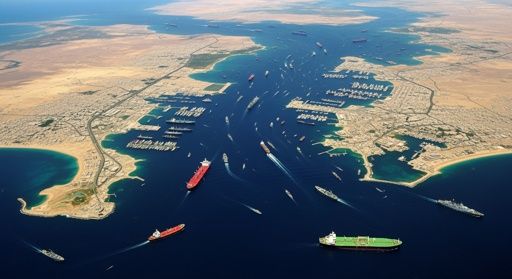
Most people hear “Strait of Hormuz” and think geopolitics. I hear it and think: hungry kids in Cincinnati.
Hunger doesn’t start at the dinner table. Here’s the chain: It starts at a chokepoint in the Persian Gulf, moves through a fertilizer plant, travels to a corporate farm in the U.S., and ends — if we’re not paying attention — with an empty shelf at a neighborhood pantry.
This is why I say hunger is a logistics problem. Not because the solution is simple. Because understanding where the chain breaks is the only way to fix it.
Nearly a third of the world’s fertilizer exports move through the Strait of Hormuz — a narrow waterway between Iran and Oman. When conflict disrupts shipping there, fertilizer prices spike globally. The cost to grow food surges. When the cost to grow food surges faster than the price farmers can charge for it, farms fail. Food disappears from the supply chain.
A Farm in Pennsylvania
I read the New York Times piece “The Last Days of Butter Ridge” recently and haven’t been able to stop thinking about it. The Watson family had been dairy farming in Pennsylvania since before the Civil War. A few weeks ago, they auctioned their cows — each one named by the Watson children. The math finally stopped working. Fertilizer costs surged nearly 70% after tariffs cut their export market.
They’re not alone. Farm bankruptcies are up 70% so far in 2026.
This hits close to home. I spent several months on my cousin’s dairy farm in Ireland. A family farmer has discretion. A relationship with their community. When a small dairy has extra milk, there’s a person who can make a call, forge a partnership, redirect that food.
Industrial operations that can adapt to geopolitics optimize for throughput and margin. The community connection — and with it, the pathway from surplus to rescue — erodes. Food disappears from the supply chain.
Surplus is Inevitable
Then there’s dairy retail. When you offer consumers a choice of milk — whole, 2%, skim, oat, almond, lactose-free, gallon, half-gallon — you cannot perfectly predict which combination they’ll reach for on any given week. You stock to meet demand across the full range of options. Sometimes you end up with product approaching its sell-by date before it’s been purchased. That’s not mismanagement. That’s what offering choice looks like in practice.
When that surplus reaches its sell-by date, the business often sends it to the landfill. Food disappears from the supply chain.
A Food Pantry in Cincinnati
The Choice at the End of the Chain
UDF (United Dairy Farmers) made a decision: rather than dump surplus milk — one of the most nutritionally valuable, hardest-to-source items at any food pantry — they donate it. They built a partnership with Last Mile Food Rescue and to date, we’ve rescued tens of thousands of gallons of milk through that partnership.
That decision didn’t eliminate the surplus. It redirected it. Waste into meals.
A systems problem turned into a logistics solution
The global forces squeezing family farms like Butter Ridge are largely beyond any of our control.
The truth is that no matter how bad the global economy, the U.S. will probably still have surplus food. What isn’t beyond our control is what happens to it.
Every gallon of milk UDF rescues instead of dumps is a family that gets a protein source they couldn’t otherwise afford. Every retailer that calls us instead of the landfill is more meals on the table.
If you’re in food retail, distribution, or production in Greater Cincinnati — and you’re sitting on surplus — call us. We’ll come get it.